A story about learning, with a few arrows along the way.
The letter
Dear Reader
You are most welcome here, and I hope you find some inspiration. This might answer some questions about how a false growth mindset and the fixed mindset triggers came about. Please don’t hesitate to contact us if you’d like to chat further.
This is a story about learning with a few arrows along the way, and the most incredible journey that continues. It is an honour to work with amazing people and organisations each and every day.
In 2013, I was CEO of the de Bono Institute (now Elevo Institute), and we created a vision for a project called ThinkPlus. The purpose was to give young learners the confidence to know they can think through anything. We designed a metacurriculum for Learnable Intelligence (developing mindset capabilities alongside practical tools for collaboration, problem-solving, and creativity) to be implemented from Prep to Year twelve.

I was mentored by Professor Carol Dweck and worked alongside the Institute’s research committee, service designers, and a small team. The programme looked promising. Through educational design research and context mapping, we sought to determine whether growth mindset messaging would hold up in real classrooms, whether teachers’ beliefs about ability would shape children’s experiences, and how to develop teachers’ skills, mindsets, and classroom practices.

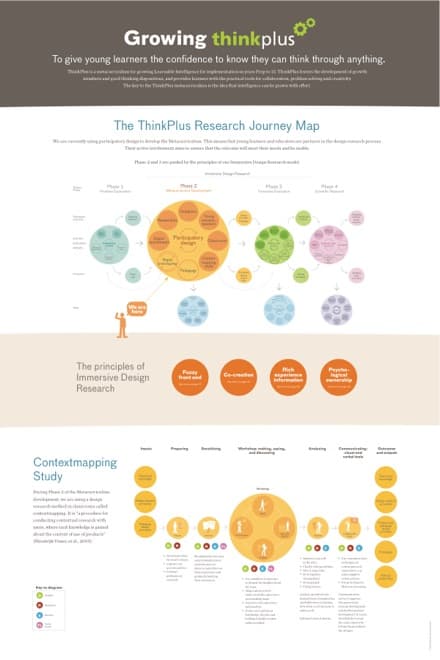
We spent six months observing what happened when growth mindset language met grading policies, lesson structures, and the small daily moments that shape what children believe is possible for them.
Something was not adding up.
Teachers were saying all the right things. Effort matters. Mistakes are learning opportunities. I believe in you. You can grow your brain, it can get stronger. The cues, practice, and support around the children were saying something else. The right answer was rewarded the first time. When children were struggling, the encouragement was “not yet” and a call to put in more effort. Mentoring, experimenting, and trying different strategies would have worked better. Challenge-seeking was still a risky move. The language used, the practices and teacher behaviours, despite the teachers’ positive intentions, were, in many ways, making things worse. What was needed was high standards with high support.
I named it a false growth mindset.
I shared the findings with the de Bono Institute board. The discovery was not well-received. I lost my role as CEO. The board chose to treat it as an inconvenience rather than a problem to solve.
I shared it with Carol. Imagine telling Professor Dweck there was a problem with the research. She was sceptical at first. The finding challenged a fundamental assumption about how the field was thinking about implementation. A cognitive scientist was telling them that growth mindset language, adopted without structural change, was causing the very harm it was meant to address.
If you are going to be a pioneer, you will collect some arrows along the way. I collected my share over the years that followed, and spent that time outside the research conversation. I have no horse in this race, and I tend to go where the evidence leads. The Science section of this site lists the high-quality studies and commentaries on growth mindset theory since 2020.
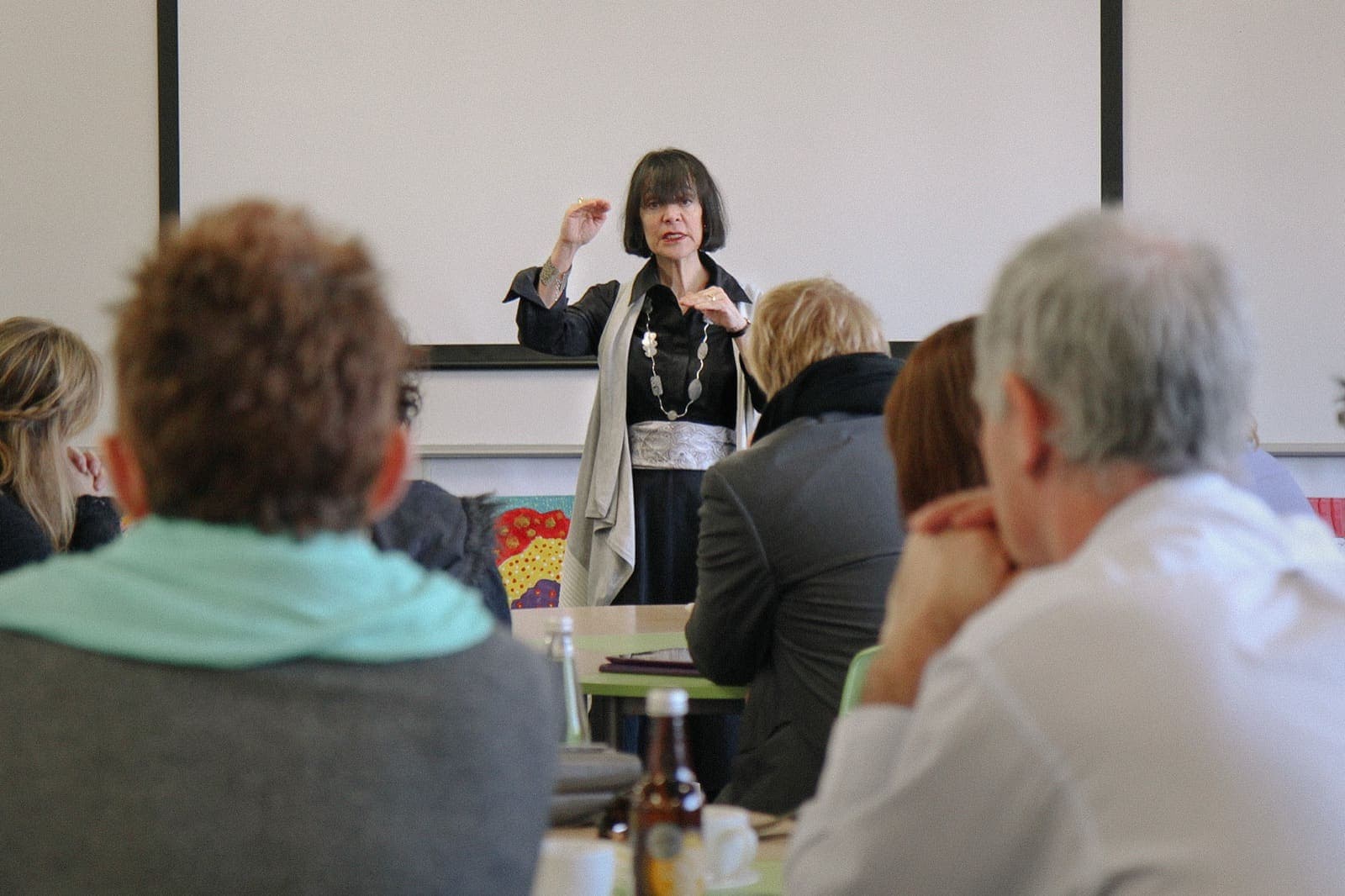
In 2015, Carol published “Carol Dweck Revisits the ‘Growth Mindset’” in Education Week.
A few years ago, my colleague in Australia, Susan Mackie, detected an outbreak of what she called ‘false growth mindset.’ She saw educators who claimed to have a growth mindset but whose words and actions didn’t reflect it. At first, I was sceptical. But before long, I saw it too.
Professor Carol Dweck · Education Week, 2015
It reopened the conversation. Growth mindset had become socially mandatory. People were claiming it to avoid the stigma of being fixed and burying their fixed mindsets. The result is image management instead of change. The false growth mindset, Carol wrote, is worse than a fixed mindset: at least with a fixed mindset, you know where you stand.
John Rives and I co-founded the Growth Mindset Institute in 2014 to research, design, and deliver mindset interventions and to reinvest earnings into ongoing research. The question we posed was simple: if telling people the facts produces a false growth mindset, what works?
What followed was a decade of research and design built on a single principle. Mindset moves along a continuum. We each have set points along the fixed-to-growth continuum, shaped by past experience and the context around us.
Fixed mindset triggers in a bank.
Carol and I worked with the senior finance executives of a large bank. We hypothesised that raising awareness of fixed mindsets could support the move toward a growth mindset.
There were sceptics. John was one of the first. He questioned whether naming a fixed mindset trigger would help people recognise what created the response, or whether anyone would acknowledge having a fixed mindset in the first place.
We introduced the concept of fixed mindset triggers to the executives: the moments that, when active, elicit a fixed mindset response. We asked them to identify the scenarios where their own fixed mindset showed up. They named the pressure to deliver results and avoid costly mistakes. Most believed feedback was criticism rather than advice. From that work, Carol and I drew two insights.
- We are all a mixture of fixed and growth mindsets, with different set points held in our own meaning-making system.
- That system organises our goals, beliefs, and behaviours. It is built through serve-and-return relationships and the data, experiences, and environments we are exposed to. Context shapes how those set points respond in any given moment.
Once acknowledged, a fixed mindset trigger can be worked with through self-awareness, insight, and a different set of responses and supportive contextual cues.
For the bank executives, fixed mindset triggers produced a recurring pattern of avoidance. They would not admit mistakes or acknowledge their limits. Naming their fixed mindset triggers changed that. Hectic Harry runs around in panic at the first sign of a mistake. Julius (as in Caesar) goes into command-and-control mode as a deadline approaches. Naming the triggers and giving them characters allowed the executives to have more authentic discussions, laced with humour. Core issues that had been ignored surfaced and were addressed in a careful, caring way. The team became the most engaged group in the bank.
Professor Dweck cited this work as a case study in the updated edition of Mindset: Changing the Way You Think to Fulfil Your Potential (Robinson, 2017).
Researching the fixed mindset triggers.
John and I began researching fixed mindset triggers with other teams. The work uncovered common triggers: beliefs about ability, effort, failure, negative feedback, others’ success, grit, challenges and comfort zone.
I designed a card game with statements about fixed and growth mindsets, each aligned with a trigger. The game went through many iterations and was played by thousands of people. Most could identify their triggers and the maladaptive behaviours linked to them: procrastination, perfectionism, avoiding feedback, and self-criticism. They also identified their growth mindset preferences. Understanding their trigger was a relief. It gave people hope as this normalised them and opened up the possibility of a conversation.
After several years of work classifying triggers through the card game, John and I wanted to validate them. We asked whether we could develop a research instrument to assess reliability, norms, and correlations with performance.
Researching the Mindset Profiler.
Working with another large bank that was using the card game widely, Carol and I had dinner with the CEO and raised the idea of a mindset assessment. The bank agreed to provide its employees with access for a validation study.
We worked with Carol, Professor Mary Murphy, and Associate Professor Katie Muenks to design the validation study and to validate the assessment. Dweck, Mackie, Murphy, Muenks, and Rives developed the working model for the fixed mindset triggers scales. Read more: Mindset Profiler™ →
After the Profiler work, Mary went on to research how organisations communicate mindset beliefs through their culture, and how those signals shape what individuals do. Her 2020 paper with Sarah Reeves identified four organisational triggers, (evaluative situations, high-effort situations, feedback, and the success of others) that correspond to the personal triggers we had been measuring but operate at the level of culture. Her 2024 book Cultures of Growth brings together the research on how organisations build or block the conditions for growth behaviours.
Twelve years on from the school study, the false growth mindset and fixed mindset triggers are the most cited concepts in our work. It explains why so many growth mindset interventions fail. It also explains why this work matters.
The people who have fixed mindset triggers are not the problem. The team, leadership, culture, and contextual cues play the most significant role in how our fixed mindset triggers respond.
Most of the time, both can change. That is what this Institute exists to do.
With appreciation,
Susan Mackie
Co-Founder, Growth Mindset Institute
Further research.
Independent researchers have since documented the same pattern. Barger and colleagues ran three studies in 2022 and identified five distinct mindset groups, with a substantial false growth mindset category in every sample. Buttrick found in 2020 that thirty-eight per cent of teachers held a false growth mindset, and their students learned at the same rate as students of teachers with openly fixed mindsets. Children read behaviour. Behaviour carries more weight than language. Read more about the false growth mindset →
Academic recognition.
Susan is named in the body of Dweck and Yeager’s 2019 landmark paper in Perspectives on Psychological Science; in Murphy and Reeves’s Research in Organisational Behaviour (2020) as the first to describe mindset triggers; in Murphy’s Cultures of Growth (Simon & Schuster, 2024) as the originator of both the false growth mindset and the mindset triggers framework; and in Angela Duckworth’s Grit. Carol Dweck named Susan in the acknowledgements of her major theoretical paper in Psychological Review (2017), for contributing to and reviewing the work.
Susan is a member of the OECD Committee for Growth Mindset, chaired by Professor Dweck.
When we face challenges or criticism, our fixed mindset is often triggered. Acknowledging this, and recognising that these triggers are completely normal rather than a deep-seated character flaw, is the first step toward genuine growth.
Professor Carol Dweck
The Mindset Profiler™ in the world.
The Mindset Profiler™ has been completed more than 90,000 times across forty-plus countries and translated into four languages. It is the benchmark for measuring fixed mindset triggers in practice.
See what we deliver
Five programme blocks, three pathways, from Profiler to practice.
Explore programmesRead the research
Thirty years of growth mindset research, distilled.
Explore the science